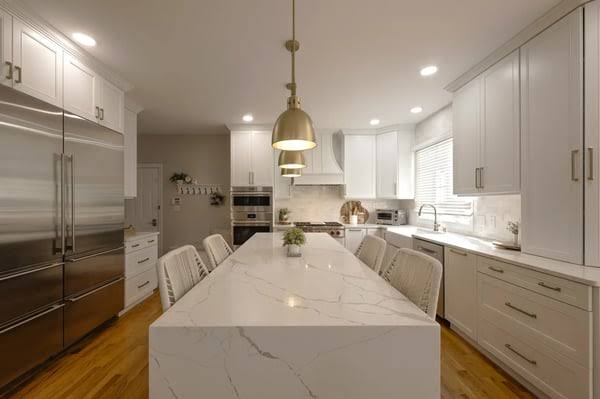
Choosing a countertop involves more than finding a color or pattern that complements a kitchen or bathroom. Non porous countertop surfaces can provide practical advantages in areas exposed to moisture, food, oils, and frequent daily use. Because these surfaces are designed to resist absorption, they can make routine cleaning and maintenance more straightforward.
For homeowners planning a renovation, understanding how countertop porosity affects everyday care is an important part of comparing materials. Resources from Hyundai L&C can help homeowners evaluate factors such as stain resistance, moisture resistance, durability, cleaning requirements, and sealing needs, all of which can influence the long-term ownership experience just as much as appearance.
Understanding Non Porous Countertop Materials
Porosity describes how easily liquids can penetrate a material. Highly porous surfaces may absorb moisture, oils, and spills, often requiring additional maintenance such as periodic sealing.
Non porous countertop surfaces resist liquid absorption, making them practical for kitchens and bathrooms where countertops regularly encounter water, food, and everyday spills. Engineered quartz is one example, offering a low-maintenance surface that does not require routine sealing or polishing. This allows homeowners to focus on regular cleaning and proper care rather than ongoing sealing treatments.
Why Nonporous Quartz Countertops Can Simplify Maintenance
Countertops face frequent spills and daily use, making easy maintenance an important consideration. Nonporous quartz surfaces offer several practical benefits:
- Resistance to absorption: Helps limit liquid penetration.
- Low-maintenance care: Does not require routine sealing or polishing.
- Stain resistance: Helps resist many common household spills.
- Design flexibility: Available in a wide range of colors and patterns.
- Durability: Designed for regular residential use with proper care.
These features can be especially useful in busy kitchens where countertops regularly encounter coffee, sauces, oils, water, and other spills. While nonporous surfaces simplify maintenance, proper cleaning and responsible use are still important for preserving their appearance and performance.
How Quartz Compares With Other Countertop Materials
Homeowners often compare quartz with natural stone, solid surfaces, and other engineered materials. Each has different characteristics, maintenance needs, and design options.
Natural stone can vary in porosity and may require periodic sealing. Quartz is engineered with a consistent composition and is generally recognized for its nonporous surface.
Beyond porosity, consider:
- Cleaning: Recommended and unsuitable products.
- Sealing: Whether periodic sealing is needed.
- Stain resistance: Performance against common spills.
- Heat and scratches: Recommended protective practices.
- Warranty: Coverage and limitations.
- Installation: Fabrication, seams, cutouts, and support.
Considering these factors alongside appearance supports a more informed countertop selection.
Non Porous Countertop Surfaces and Stain Resistance
Stain resistance is one of the practical reasons homeowners consider nonporous surfaces. When a countertop absorbs liquids, substances can potentially penetrate below the visible surface. A nonporous surface limits that absorption, making appropriate surface cleaning an important part of everyday care.
HanStone Quartz is designed to provide stain resistance for normal residential applications. However, stain resistant does not mean completely stain-proof. Certain substances, prolonged exposure, or inappropriate cleaning products can still affect a countertop’s appearance.
For this reason, prompt cleanup remains a sensible practice. Wiping spills soon after they occur can help keep the countertop looking clean and reduce unnecessary exposure to potentially problematic substances.
Common household habits can also support better countertop care. Using a cutting board for food preparation, placing hot cookware on a suitable trivet, and following manufacturer cleaning recommendations can help protect the surface from avoidable damage.
Caring for Non Porous Quartz Countertops
Nonporous quartz is low-maintenance but still requires proper care. Routine cleaning with warm water, a soft cloth, and a suitable non-abrasive cleaner can help maintain the surface.
For everyday protection:
- Clean spills promptly.
- Use a cutting board for food preparation.
- Place hot cookware on trivets.
- Avoid abrasive cleaners and harsh chemicals.
- Follow the manufacturer’s recommended care instructions.
Proper cleaning and responsible use can help preserve the countertop’s appearance and performance over time.
Does Nonporous Mean Maintenance-Free?
The answer is no. This distinction is important when evaluating countertop marketing claims.
A nonporous countertop can reduce certain maintenance requirements, such as regular sealing, but it still requires appropriate cleaning and responsible use. Even highly durable surfaces can be scratched, damaged by excessive heat, or affected by inappropriate chemicals.
For example, HanStone Quartz is stain and scratch resistant, but Hyundai L&C notes that the surface is not completely stain-proof or scratch-proof. Protective practices such as using cutting boards and trivets can therefore remain important parts of everyday care.
Understanding this distinction helps homeowners establish realistic expectations. The goal is not to find a countertop that never requires attention. Instead, the goal is to choose a surface whose maintenance requirements fit the way the space will actually be used.
What to Consider Before Choosing a Quartz Countertop
Choosing a countertop requires balancing practical needs with design preferences. Before purchasing, homeowners can ask a fabricator, installer, or manufacturer:
- Does it require sealing?
- How should spills be cleaned?
- How does it handle heat?
- What installation support is needed?
- What warranty applies?
- What colors and patterns are available?
Considering these factors can support a more informed decision beyond appearance alone.
Consider the Entire Countertop Installation
Even the right countertop material needs proper fabrication and installation. Measurements, cabinet preparation, seams, edge profiles, sink cutouts, appliance openings, and support requirements can all influence the finished installation.
Homeowners should discuss these details before fabrication begins. Confirming dimensions and design requirements early can reduce misunderstandings and help the installation team prepare appropriately.
The same principle applies to countertop care. Reviewing manufacturer documentation before installation gives homeowners a clearer understanding of how the surface should be cleaned and protected once it is in use.
Explore Quartz Countertop Resources Before Buying
Product documentation can be a valuable resource during countertop planning. Instead of relying only on photographs or showroom samples, homeowners can review information about surface characteristics, available designs, care recommendations, certifications, warranties, and technical specifications.
Hyundai L&C provides resources for HanStone Quartz that can help homeowners and professionals understand the product beyond its visual appearance. Reviewing this information before making a purchase can make it easier to compare countertop materials according to practical requirements as well as design preferences.
A well-informed selection process can also help set realistic expectations about maintenance. Knowing what a material can and cannot withstand is just as important as knowing which color will work with the surrounding space.
Find the Right Balance of Style and Performance
The best countertop decision begins with a clear understanding of how the surface will be used. For homeowners considering non porous countertop surfaces, quartz offers a combination of low-maintenance care, stain resistance, moisture resistance, durability, and design flexibility that can suit a wide range of kitchen and bathroom applications.
However, material selection should not stop at the word “nonporous.” Reviewing cleaning requirements, heat and scratch precautions, installation considerations, warranty terms, and manufacturer documentation provides a more complete understanding of the investment.
Before finalizing a countertop, take time to compare the material’s documented characteristics with the demands of the space. Exploring HanStone Quartz resources from Hyundai L&C can provide additional information to help homeowners move from initial design ideas toward a countertop selection based on both appearance and everyday performance.